A foundation contractor has secured enough work to consider purchasing a dedicated helical pile machine. Hiring equipment for individual projects has become inconvenient, and subcontracting installation work reduces control over scheduling. Ownership appears to offer a straightforward advantage, but the purchase price tells only part of the financial story. The machine will require transportation, servicing, fuel and an operator, while periods without installation work will continue to generate certain expenses. Whether the investment makes commercial sense depends on how these costs compare with the revenue the equipment can realistically help produce.
The calculation becomes more complicated when different machine configurations are considered. A contractor might choose a hydraulic attachment for an existing excavator or invest in a self-propelled tracked installation system. The latter provides dedicated mobility and positioning capabilities but also introduces additional components to maintain and transport.
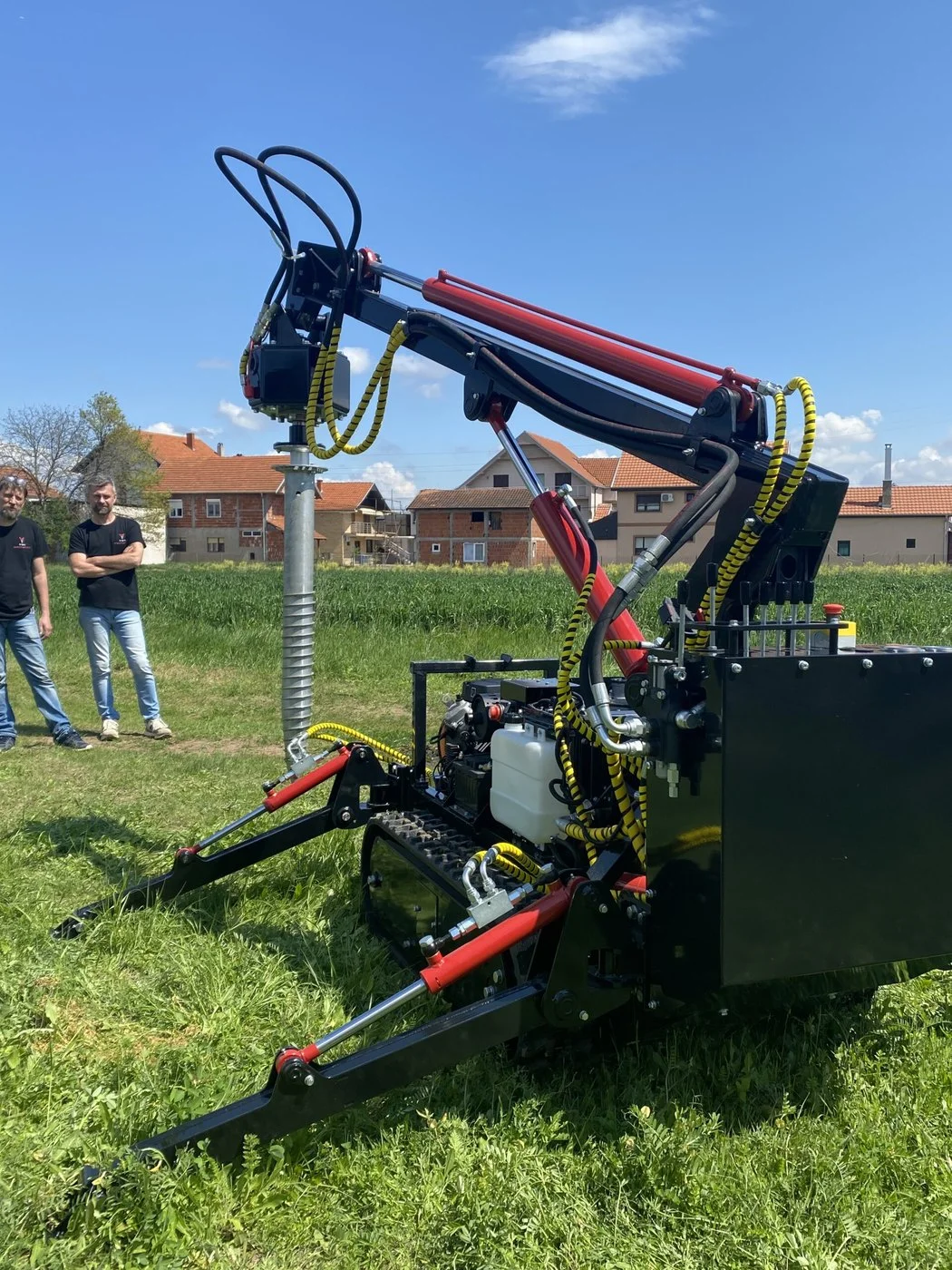
Machines such as the Cougar, described at https://iron-mechanics.com/product/helical-pile-machine/, illustrate the type of equipment a specialist foundation contractor might consider purchasing. Its tracked chassis, hydraulic drive and telescopic boom bring several installation functions together. Determining whether such a machine represents a sound investment requires examining not only its technical capabilities but also the workload needed to recover the capital committed to it.
Purchase Price Is Only the Starting Point
The initial cost of a helical pile machine is usually the most visible expense. Contractors can compare quotations, financing arrangements and available configurations before making a purchase. However, two machines with different prices may have substantially different total ownership costs over their working lives.
A less expensive machine may require additional equipment for positioning, transportation or hydraulic power. A dedicated installation machine may incorporate these functions but involve higher servicing expenses and a greater initial investment. The appropriate comparison must account for the complete working arrangement rather than the price of the drive unit alone.
Importing machinery can introduce further costs. Freight, unloading, customs procedures where applicable, insurance and commissioning may increase the amount required before the equipment becomes operational. Taxes should also be considered according to the company’s accounting circumstances, particularly where recoverable VAT is involved.
Financing changes the financial picture without necessarily changing the underlying economic value of the machine. A business purchasing equipment through a loan may face regular repayments and interest charges, while a cash purchase ties up capital that could otherwise support other activities. Both approaches have consequences for working capital and financial flexibility.
Depreciation is another important component of ownership. Equipment loses economic value through age, wear, technological changes and market conditions. The rate of depreciation used for management calculations may differ from the treatment required for financial reporting or taxation.
Contractors should therefore distinguish between the cash needed to purchase machinery and the cost of using that machinery over several years. This distinction provides a more reliable basis for comparing ownership with hiring or subcontracting.
Understanding the Costs of Running the Machine
Once machinery enters service, its operating expenses depend on working hours, installation conditions and maintenance requirements. Some costs increase directly with use, while others continue even when the equipment is idle.
Fuel consumption is a variable expense that contractors can estimate from actual operating records. The amount consumed depends on engine characteristics, hydraulic loading, idling time and working conditions. A machine performing demanding installations may consume more fuel per hour than the same equipment operating under lighter loads.
Maintenance introduces both scheduled and unexpected expenditure. Hydraulic fluid, filters, hoses, seals and mechanical components require inspection and replacement according to the manufacturer’s recommendations. Tracked machines also have undercarriage components that experience wear through movement and operation on abrasive surfaces.
Transport can represent a considerable cost, particularly for contractors working across a wide geographical area. Moving machinery between projects may require a suitable trailer, towing vehicle, loading equipment or specialist transport service. The cost per project depends on distance, machine weight, mobilisation arrangements and the number of working days at each location.
Insurance, storage and administrative expenses should also be included. These costs may be relatively predictable, but overlooking them can create an unrealistic impression of profitability. Operator training and safety-related expenditure form part of the wider cost of maintaining a reliable installation service.
A useful ownership model separates expenditure into the following categories.
- Capital costs. Purchase price, financing expenses and depreciation over the expected ownership period.
- Operating costs. Fuel, lubricants and consumables required during installation.
- Maintenance and repairs. Scheduled servicing, replacement components and allowances for unexpected failures.
- Transport and mobilisation. Equipment delivery, loading, unloading and movement between projects.
- Personnel costs. Operator wages, employer contributions, training and associated labour expenses.
- Fixed overheads. Insurance, storage and other costs that continue independently of machine utilisation.
The value of these categories becomes clearer when contractors record expenses against operating hours and completed projects. Without this information, costs can easily disappear into general company overheads, making individual foundation jobs appear more profitable than they actually are.
Comparing Ownership, Hiring and Subcontracting
Purchasing machinery is only one way to provide helical pile installation services. Contractors can also hire equipment or engage specialist installation companies. Each arrangement distributes financial responsibilities and operational risks differently.
Hiring may be attractive when the workload is irregular. The contractor pays for equipment during the required period without committing capital to long-term ownership. Depending on the rental agreement, certain maintenance responsibilities may remain with the supplier. However, delivery charges, minimum rental periods and equipment availability can affect the total cost.
Subcontracting moves more of the installation responsibility to an external provider. This can reduce the need to employ specialist operators or maintain dedicated machinery. It may also provide access to equipment that would be uneconomical to purchase for occasional projects. The disadvantage is reduced direct control over scheduling and the installation resources available.
Ownership offers greater independence, provided the equipment is available and suitable for the work. Contractors can schedule installations around their own operations and may avoid repeated rental arrangements. Nevertheless, they assume responsibility for maintenance, equipment utilisation and the financial consequences of breakdowns.
The comparison should be made on the basis of equivalent services. A subcontractor’s quotation may include an experienced operator, transport and certain installation activities, while a machine rental price may cover only the equipment itself. Comparing these figures without adjusting for the different scopes of work produces misleading results.
Availability also has economic value. A contractor who repeatedly delays projects because hired equipment is unavailable may lose revenue or incur additional labour costs. Yet this potential benefit of ownership should be supported by actual project experience rather than assumed future demand.
The preferred arrangement can change as a business develops. Hiring may be sensible during an initial period of limited work, while ownership becomes more attractive when installation volumes become predictable. Contractors should revisit the calculation as their workload and operating conditions change.
Calculating the Break-Even Point
The financial case for purchasing a helical pile machine becomes easier to evaluate when fixed ownership costs are compared with the savings generated by using it. A simple break-even calculation can show how much work is required before ownership becomes less expensive than hiring equivalent equipment.
Consider a hypothetical contractor evaluating a dedicated installation machine. The figures below are illustrative assumptions, not prices or performance estimates for any specific manufacturer.
Suppose the equipment costs £35,000, with an expected residual value of £10,000 after five years. Assuming straight-line depreciation for this management calculation, the annual depreciation expense would be £5,000. If financing, insurance, storage and other fixed ownership expenses amount to a further £2,000 per year, the total annual fixed cost would be £7,000.
Now assume that hiring an equivalent installation system would cost £500 per working day, while the variable cost of operating the owned machine, excluding labour common to both alternatives, would be £150 per day. Ownership would then save £350 for each day of use before accounting for fixed annual costs.
The break-even point can be calculated by dividing annual fixed costs by the savings per operating day.
£7,000 ÷ £350 = 20 operating days
Under these assumptions, ownership and hiring would have approximately equal annual economic costs at 20 operating days. Beyond that level, ownership could become less expensive, provided the original assumptions remain valid.
This simplified calculation deliberately excludes certain complications. Major repairs, unexpected downtime, changes in rental prices and differences in transport costs could alter the result. The treatment of financing and depreciation must also avoid double-counting capital costs.
An economic break-even calculation is not the same as a cash-flow forecast. A company buying machinery outright must still fund the full purchase at the outset, even if the annual economic comparison favours ownership. A financed purchase introduces repayment obligations that may not correspond directly to accounting depreciation.
For this reason, contractors should prepare both an ownership-cost model and a cash-flow projection before committing to expensive equipment. The first tests whether the investment is economically attractive; the second establishes whether the business can comfortably finance it.
Why Machine Utilisation Determines Profitability
A machine can be technically capable and reasonably priced yet remain a poor investment if it is used too infrequently. Utilisation describes how much productive work the equipment performs over a given period. For specialist construction machinery, this measure often has a greater influence on ownership economics than small differences in purchase price.
Contractors should distinguish between scheduled working days and actual productive use. A machine may be present on site for a week but spend much of that time waiting for materials, engineering decisions or suitable weather. Such delays increase the effective cost of each completed foundation position.
Installation speed is not the only factor affecting utilisation. Transport arrangements, site access and the availability of supporting personnel determine how efficiently the equipment can move between jobs. A self-propelled machine may reduce certain repositioning tasks, but those advantages need to be evaluated against the specific projects undertaken.
Seasonality can create additional difficulties. Construction demand, weather conditions and ground accessibility may limit opportunities to use equipment during certain periods. A business operating in a region with pronounced seasonal restrictions should avoid calculating annual returns from an unrealistic assumption of uninterrupted work.
Reliable forecasting begins with the contractor’s existing order book and historical installation records. Confirmed projects provide a stronger basis for investment than speculative expectations of future demand. Companies can then examine how changes in workload would influence the financial result.
Utilisation should also be measured alongside output quality. Operating machinery continuously does not create value if installations require corrective work or fail to meet engineering requirements. Productive hours are those contributing to acceptable completed foundations, not simply hours recorded on the engine meter.
Selecting Equipment That Matches the Business
A financially attractive machine must also be technically suitable for the contractor’s normal projects. Equipment with insufficient torque may prevent the company from completing demanding installations, while a machine with far greater capacity than required can increase capital costs without delivering corresponding benefits.
The dimensions and complexity of the equipment matter as well. Contractors working mainly on confined residential sites may value portability more than independent tracked movement. Companies installing large numbers of piles across open construction sites may place greater importance on integrated positioning and mobility.
Hydraulic compatibility can influence the decision where an existing excavator is available. Purchasing a suitable drive attachment may require less capital than acquiring a complete self-propelled machine. However, the excavator’s availability, hydraulic output and operating costs must be included in the comparison.
Dedicated tracked equipment presents a different ownership proposition. It provides its own travelling platform and installation arrangements, reducing reliance on a separate carrier for certain operations. This can be useful where the contractor needs repeated access to multiple foundation positions, although transport and maintenance requirements remain relevant.
Before selecting a particular machine, the contractor should consider the range of pile dimensions, expected ground resistance and project types likely to dominate future work. Manufacturer specifications should be checked against these requirements, and practical demonstrations can help establish whether the operating arrangement is suitable.
Purchasing equipment solely to expand the range of services offered may be financially risky if demand for those services has not been established. A more cautious approach is to identify the work already available and determine which machine configuration can complete it efficiently.
Protecting the Investment Through Maintenance
The working life of a helical pile machine depends on how it is operated and maintained. Hydraulic equipment is exposed to substantial mechanical loads, and construction environments can introduce dust, moisture and abrasive materials. Neglecting maintenance can reduce reliability and shorten the useful life of expensive components.
Scheduled servicing should follow the manufacturer’s documentation. Hydraulic fluid condition, filters, hoses, seals and connections require appropriate inspection. Engine maintenance and mechanical checks must also form part of the programme for self-propelled equipment.
Unexpected repairs can disrupt both project schedules and financial forecasts. A breakdown may create direct repair expenses while preventing the machine from generating revenue. Contractors should therefore include a realistic maintenance reserve in their ownership calculations rather than assuming that only routine servicing will be necessary.
Access to spare parts and technical support can influence the duration of interruptions. Equipment purchased from a distant supplier may require additional planning for replacement components and servicing arrangements. The availability of documentation and suitable local repair expertise should be established before purchase.
Operator competence contributes to equipment longevity. Excessive loading, unsuitable hydraulic settings and incorrect handling can accelerate wear or cause damage. Training personnel to recognise abnormal operating conditions can reduce avoidable failures.
Maintenance records also support future financial decisions. They reveal recurring expenses, provide evidence of equipment condition and help contractors determine when replacement may be more economical than continued repair.
Making a Sustainable Investment Decision
The decision to purchase a helical pile machine should be based on the economics of the contractor’s actual business rather than general claims about rapid equipment payback. Installation rates, project values and operating expenses vary too widely for a single recovery period to apply to every company.
A well-prepared investment model should reflect the expected workload, realistic ownership costs and the alternatives available to the business. Sensitivity testing can show how the result changes if utilisation falls, repairs increase or equipment hire becomes cheaper. These calculations help identify whether the investment remains viable under less favourable conditions.
Contractors should also consider the strategic value of controlling their own installation resources. Reliable access to suitable machinery may improve scheduling flexibility and reduce dependence on external providers. Those benefits can be commercially meaningful, but their financial value should be supported by evidence from existing operations.
Equipment ownership creates an opportunity to retain more installation work within the business, but it also transfers greater responsibility to the contractor. Maintenance, operator availability, transport and capital management must all be handled consistently.
A helical pile machine becomes a worthwhile investment when its capabilities match the contractor’s projects and its utilisation justifies the financial commitment. The strongest purchasing decisions combine technical evaluation with realistic cost forecasting, allowing construction businesses to expand their installation capacity without placing unnecessary pressure on profitability or working capital.